Can You Burn Garden Waste in NSW? Burning Off Rules and What to Do Instead
By Dylan Anderson ·
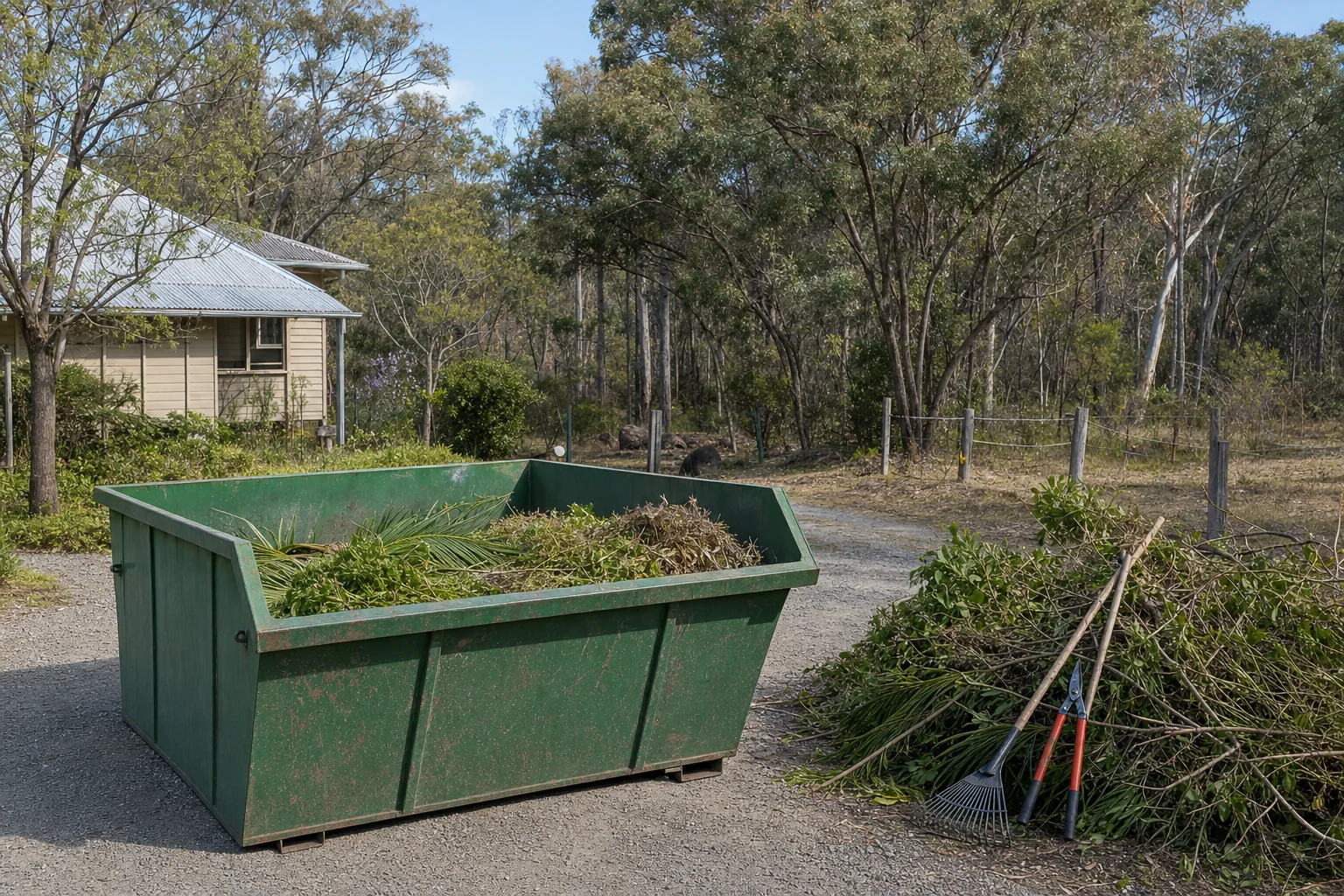
For most people in NSW the answer is no, and not just during fire season. Burning vegetation and domestic waste in the open is generally prohibited all year round in every council area across the Sydney, Wollongong and Newcastle regions, plus a list of other councils set out in the Clean Air Regulation.
That catches a lot of people out. The common assumption is that a fire permit is the only thing standing between you and a burn pile, when in much of the state there's a separate approval you were never going to get. With the Bush Fire Danger Period starting on 1 October and spring clean-ups in full swing, it's worth knowing which rules apply to your block before you strike a match.
Two different sets of rules, and they're easy to mix up
This is where most of the confusion comes from. There are two separate systems, run by different authorities, and where both apply you need to satisfy both.
Clean Air Regulation: can you burn at all?
The Protection of the Environment Operations (Clean Air) Regulation decides whether open burning is allowed in your area in the first place. Some council areas prohibit burning anything without EPA approval. Others allow vegetation to be burnt if the council approves it, sometimes with conditions about dry and dead vegetation on larger lots. Some areas have no restrictions at all. Your council's open burning policy is the thing to check.
NSW EPA guide to open burning, including the council area map
RFS fire permit: can you burn right now?
Separately, during the Bush Fire Danger Period you need a fire permit from the NSW Rural Fire Service to light a fire in the open in a Rural Fire district. In Fire and Rescue NSW districts a permit is required at all times, not just during the Danger Period.
The statutory Bush Fire Danger Period runs from 1 October to 31 March, though start and finish dates vary by local area depending on conditions. Permits are free.
NSW RFS on the Bush Fire Danger Period and fire permits
What a fire permit actually requires
A permit is not a tick and forget. The standard conditions are more demanding than most people expect:
- You must notify the RFS and your neighbours at least 24 hours before you burn
- The permit has to be carried on site when the fire is lit
- The fire needs constant supervision unless the permit says otherwise
- Permits can be varied, suspended or cancelled as weather conditions change
- You must be satisfied the fire can be contained, won't include toxic material, and won't cause excessive smoke
Total Fire Bans and EPA no-burn notices override all of it. Check both on the day, not the week before.
What you can light without approval
Some fires sit outside the open burning rules in NSW. Barbecues and backyard fire pits don't need approval, provided they burn only dry seasoned wood, LPG, natural gas or proper barbecue fuel with a small amount of firestarter. Camping and cooking fires are treated the same way. Eligible hazard reduction work, certain agricultural burning and authorised firefighting training are also permitted.
The catch is that a fire pit is not a loophole for garden waste. Green offcuts, leaves and damp prunings produce heavy smoke, and councils can act on excessive smoke or nuisance even where the fire itself is allowed.
The 10/50 clearing entitlement
If your property sits inside a designated 10/50 Vegetation Clearing Entitlement Area, you can clear trees within 10 metres of your home's external walls and underlying vegetation such as shrubs, but not trees, within 50 metres, without seeking approval. It applies to native and introduced species alike.
There are conditions. You need to own the property or have the owner's approval, the building must be lawfully constructed with an occupation certificate, and tree removal is tied to trunk circumference measured at 1.3 metres above the ground. The RFS is clear that you should check the online tool on the day you clear, because entitlement areas and rules can change.
Check whether your property is in a 10/50 entitlement area
Worth noting that 10/50 governs what you may cut down. It says nothing about how you get rid of it, which is where most of the work actually sits.
Where the green waste can go instead
Your council green bin
Fine for ongoing garden maintenance, useless for a serious clear-out. A single afternoon of pruning will fill a 240 litre bin, and most councils collect it fortnightly.
The local transfer station or tip
Cheap per load if you've got a ute or a trailer and time to spare. The cost is trips. A decent property clean-up is rarely one load, and green waste is bulky, so you'll be back and forth.
A green waste skip bin
Makes sense when the volume is beyond a few trailer loads, when you don't have a trailer, or when the clearing is happening over a weekend and you want it gone at the end. Green waste bins are usually priced differently to mixed waste because clean vegetation can be processed into mulch and compost rather than landfilled.
Chipping or mulching on site
If you've got the space and the patience, a hired chipper turns prunings into mulch you can spread back onto garden beds. Best for branches and woody material rather than leaf litter and grass.
What goes in a green waste skip, and what doesn't
A green waste bin needs to stay clean to be processed as organics. Accepted waste varies by supplier, bin type and location, so check before you load, but the usual split looks like this.
Generally accepted: branches, prunings, leaves, grass clippings, small tree stumps, palm fronds and untreated timber offcuts.
Generally not accepted in a green waste bin: soil and turf, rocks, treated or painted timber, sleepers, pots and plastic plant containers, hoses, wire and general household rubbish. Adding any of these can turn a clean green load into a mixed load, which is charged differently.
If your clean-up is genuinely mixed, say vegetation plus old fencing and a bit of rubble, say so when booking. A correctly classified mixed waste bin costs less than a contaminated green one.
Ask us which bin suits your clean-up
Weight, fill line and access
Green waste is bulkier than it is heavy, so volume usually runs out before weight does. Two things still catch people out. Loading above the rim means the bin can't be safely covered for transport, so it may not be collected. And freshly cut green material is much heavier than it looks once it's wet, particularly turf, palm fronds and anything with soil still attached.
Think about placement too. A bin needs a firm, level spot with clear truck access, and if the only option is the road or the nature strip you may need a council permit for that.
How skip bin hire pricing works in Australia
Before you light anything, check these
- Look up your council area on the EPA open burning map to see whether burning vegetation is allowed at all where you are.
- Check your council's open burning policy and get approval if it's required.
- If you're in a Rural Fire district and it's between 1 October and 31 March, apply to the RFS for a fire permit.
- On the day, check for a Total Fire Ban and any EPA no-burn notice.
- Notify the RFS and your neighbours at least 24 hours ahead, as your permit requires.
If any of those steps comes back no, that's your answer, and the green waste needs another home.
The short version
Across much of urban NSW you cannot burn garden waste at any time of year, permit or not. Outside those areas you may need council approval under the Clean Air Regulation and an RFS fire permit during the Bush Fire Danger Period, which starts on 1 October. The rules are local, they change, and the only reliable answer comes from your own council and the RFS rather than from a neighbour who's always done it.
If you're clearing a property before summer and the burn pile isn't an option, a green waste skip is usually the simplest way to deal with it in one go. Check sizes and get a price on our booking page, and if you're not sure whether your load counts as green or mixed, ask us first and we'll sort it out before the bin turns up.